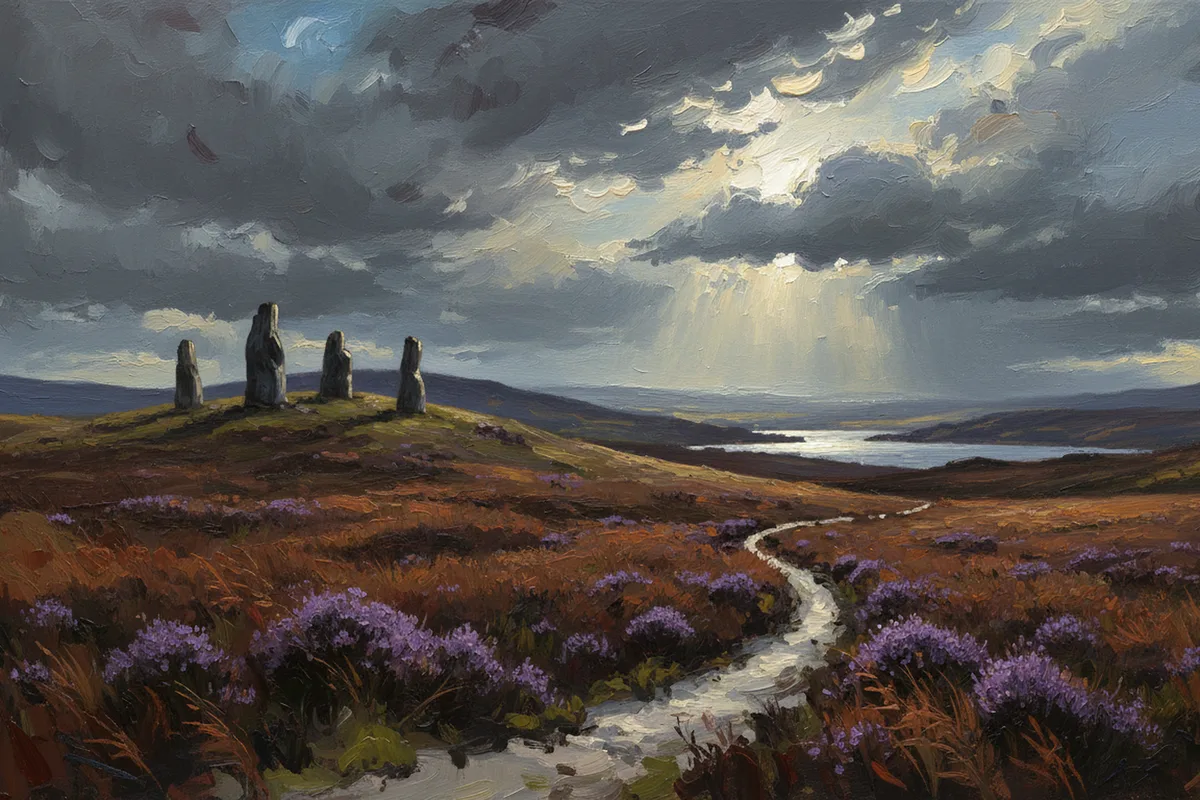
The weather on the moor changes by the minute. A storm has been passing through all afternoon, piling the sky with heavy clouds in slate and charcoal, and the wind has not stopped once. Then, for a moment, the clouds open, and a shaft of silver-gold light falls through the gap onto the loch far below.
On the ridge to the left stand four ancient stones. They are rough and weathered, leaning slightly, each a different height, and they have been standing here far longer than anyone can remember. Against the bright gap in the sky they look almost like figures, a small group gathered on the hilltop to watch the light arrive.
From the foreground, a pale track winds up toward them, wet from the rain and shining where it catches the sky. On either side the moor is a rough blanket of heather and bracken. The heather is in its last violet bloom, scattered in purple clumps, and the bracken has turned to rust and copper. Everything bends in the same direction, combed by the wind.
Beyond the ridge the land falls away to the loch, a long sheet of water lying between dark hills. Where the light touches it, it flashes silver; everywhere else it is the colour of pewter, cold and still. The far hills fade into rain.
The painting is made as a quick, expressive oil sketch, with loose brushstrokes laid down in rhythmic sweeps that follow the movement of the wind. The clouds are thick and churning, the heather flicked in with short strokes of violet. It feels painted on the spot, before the light could change again.