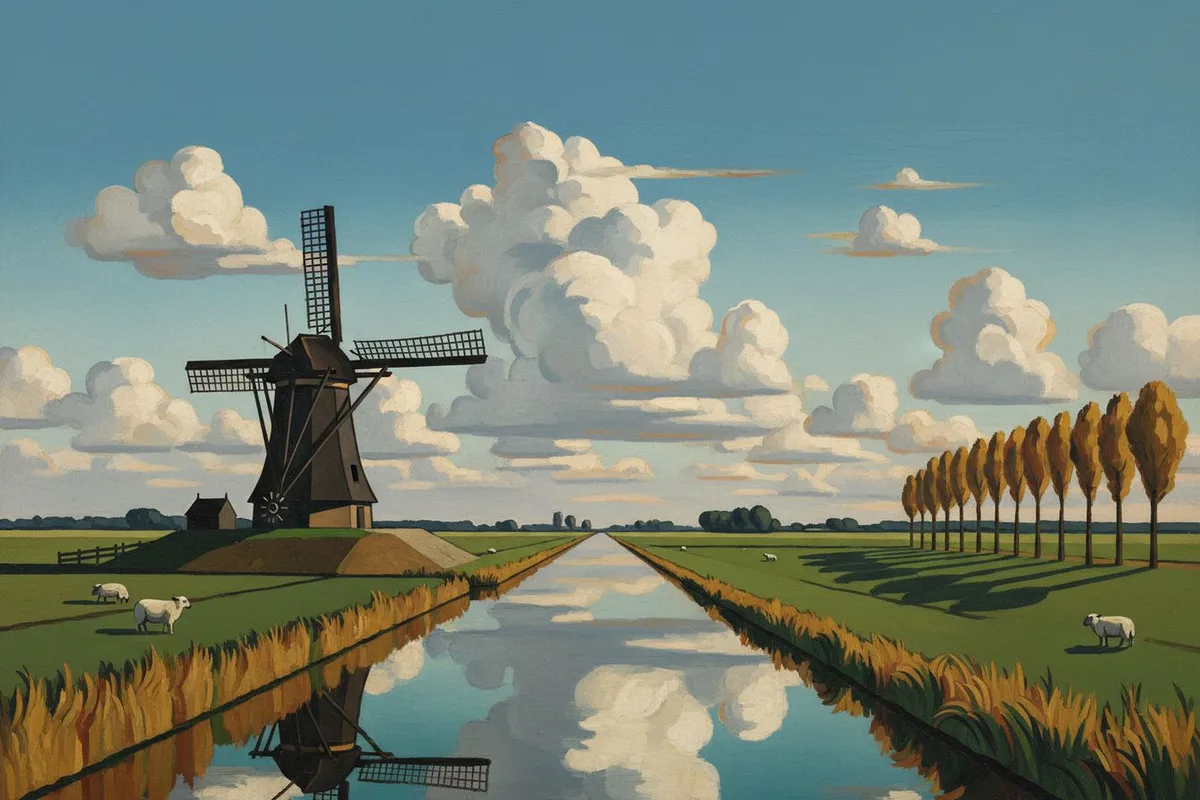
In the polder, the land is so flat that the sky becomes the main event. Here it is enormous, a deep teal blue filled with towering white clouds that pile up like cream, their tops bright in the afternoon sun and their undersides softly shaded.
A long canal runs straight from our feet to the horizon, perfectly ruled, as if someone had drawn it with a ruler. Its water is so still that it holds the whole sky: every cloud, every patch of blue, even the dark sails of the windmill, all upside down in a long silver strip through the middle of the picture.
On the left, the windmill stands on its dyke, dark and solid, its sails spread wide. A small cottage with a steep roof sits at its foot, and a wooden fence runs along the bank. The mill has been here for generations, keeping the water in its place and the fields dry, and it has the patient look of something that has seen a great many autumns.
On the right, a row of poplars marches toward the horizon, their leaves turned to gold and mustard, each tree casting a long shadow across the green meadow beside it. White sheep graze on both banks, small and peaceful, and the reeds along the canal edges have turned to straw gold and rust.
The painting is made in the Cloisonnist style, with every shape outlined in dark contours and filled with flat, matte colour, like stained glass or an old travel poster. Details are simplified, forms are clear, and the result has a calm, graphic order that suits this tidy, man-made landscape perfectly.